
Modelling for Multiple Value - Planet-People-Profit

Updated: Dec 20, 2025

Two new papers were temporarily free of charge. If you book a call, you can still get them for free. Check out Harbor Regeneration and 2-earn blockchain models for anti-fire, anti-corrosion.
We love to stack value on value.
Simple Complexity Modelling
What is it, and why is it important to Design by Nature? Well, there’s human health to consider. We all know that accumulation is the biggest flaw in any system. It becomes toxic. Too much uniformity is always toxic. Diversity is Key.
In the industrial centuries, we focused on megalomania. The creative solutions are always local. Think of diversity where one person uses another's waste. It’s designed from small to big, just like an ecosystem. Small pods, interconnected.
How will the business models look, you ask? They’ll feature multiple income streams. Some niches will have high margins. Sometimes, we’ll incorporate block-chained carbon credits or blue bonds into the model.
And what about government models? Small government. Lean. First time right by Design. If you want to prevent institutional racism and debt, design for anonymity. Avoid triggering bias in users of systems. No debt means non-linear designs. Always anchor the payout of benefits. Never ask for money back! People won’t have it. It will just accumulate as debt.
People are not future-thinkers. We need to organize that in our systems. Tokenization and blockchains can help with this through Decentralized Finance. Peer-to-peer systems.
We once discussed with renowned professor Bernard Lietaer, part of the euro team, how to make digital money an unconditional basic income for basic needs. Back then, we saw the huge potential for systems change with blockchain and crypto. Imagine a world with no rent and no energy bills!
In our papers on harbor regeneration and 2-earn blockchains, you’ll find examples of these ideas.
No debt - Change interest into demurrage in the system.
No rent - Stichting Phien does it in Limburg, The Netherlands. They have an intergenerational finance concept with interest-free loans paid back over 50-100 years. Around 100 euros per month. People build off-grid houses themselves, innovatively using smart grids and hybrid energy sources.
No energy bill - Another example in Limburg. In a Rhombus Sustainable report, we maximized abundant energy created in a river harbor. No windmills, no solar parks—just thermodynamics in sheet pile walls of the canals and local biomass/biogas from organic waste.
No homelessness - We wrote a report about soil, water, nitrogen, and enough homes for a consortium this summer. "Boeren, Bouwen & Blockchains." This is used for funding purposes at the EU and our Dutch government. We also wrote a business model for after the subsidy, full of nature solutions for our country's nitrogen problems. Just like carbon has fixers, nitrogen has fixers too.
When you fix it for decades in a building using material passports for a circular economy, you can draw carbon credits and blue bonds into your farmer and builder's business models. Dutch precision farmers and builders have ambitious visions to tackle our country's challenges. We can't wait for a strong government to act. Groups of ambitious entrepreneurs are taking charge.
Decision Making with Biology
If you want to be a leader, it’s crucial to transform your own biases and broaden your perspective. You must fill in the C—the alternatives, right? Or you need to lead a diverse team that fills in those alternatives.
How can you become more creative and less boxed in? Past generations were often forbidden to write with their left hand. In my country, at least, we all became right-handed and left-brained. So, if you start brushing your hair with your left hand, take a different route to work, or even walk backward when you get stuck in thought loops, you’ll become better at seeing all the options. We say at Abundance that there are 1000+ interconnected solutions.
If you’re unsure about what’s healthy, you now have Academic AI to help you find the nuances. Learn to ask the right questions! You’ll be surprised by what you discover because nature is not linear.
Example:
AI glyphosate is a hormone influencer that can hinder your country’s fertility. Everyone blames farmers and Roundup. But look for glyphosate-like substances that appear from washing liquids during the drinking water process.
If you want to create new governance or business models that promote fertility, you can fill in many things in C.
Close the sewer systems to prevent anti-conception pill contamination. "Clean at the source" is a principle of nature. Cleaning can be done naturally (think halophyte filtering with grit and plants) or through innovative methods. You can patent your findings. It solves a problem! Closing sewer systems also helps eliminate microplastics, which come from washing synthetic clothes. You could even patent a sonar system for cleaning clothes. Washing without water has been done in Schiedam since the 1990s, but the time wasn’t right back then. Now, it is ripe for innovation, and you can incorporate blue bonds into your business model and financing system.
Non-linear drinking water production. We must avoid extracting groundwater (which causes cities to sink) and surface water (which is too polluted by microplastics). What else is there? In coastal areas, you can opt for desalination. Extract all minerals and add new fresh ones to the water. In Spain, biomimetics have been used to reach nearly the theoretical minimum (1.7 kW/h per 1 m³ of water). In the Australian desert, they’ve chosen condensation to create freshwater from temperature differences.
Nature's Math
For all these tech solutions and Design by Nature approaches, you need a bit of math and geometry. Spatial relations are vital.
To simplify, we have two kinds of math on our Gaia-planet: cylindrical math with a membrane (a step) in between, and Moebius Math of direct transformations. The latter appears frequently in our papers and education. It’s key to understanding how biology operates differently than mechanical engineering—80% differently, in fact. Living systems are unique.

Even with dead materials like rock or iron, modern antennas for smart cities use these principles. Smart cities employ sonar waves modeled after dolphin communication. We call this the Rope Models of biomimicry.
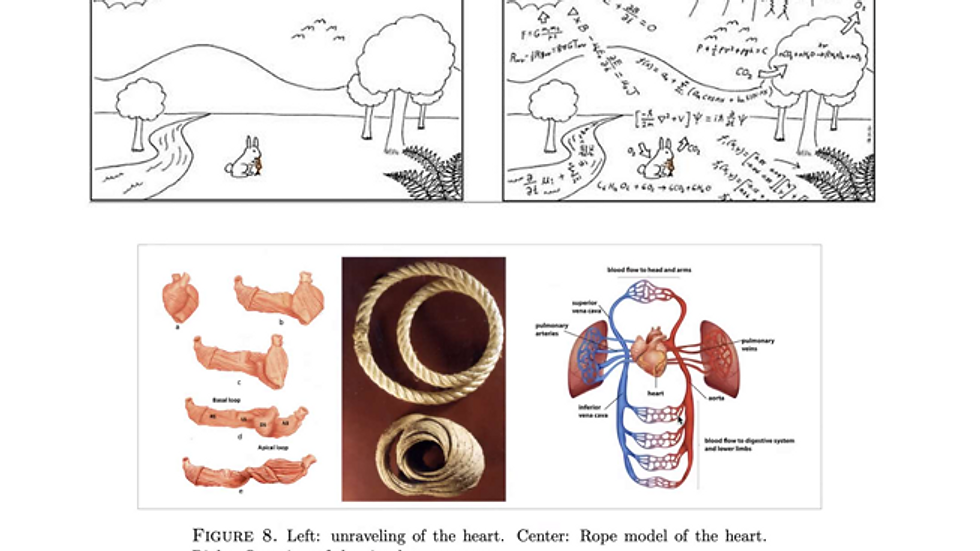
Cleaning, transport, and exchange can occur in one energy-efficient data model. This is currently used for healthy city designs with wetlands, ensuring no malaria. We love that kind of abundance! Visionary architecture teams in Germany are also using these principles for towers shaped like cacti. They’re renovating buildings into healthy spaces using just two membranes and opening up the shapes inside. These buildings are powered off-grid with piezo-electronics and the pressure of the roof, thanks to teams from Polytecnico Torino.
We’ll write more about these built-environment beauties soon.
The circular economy has matured since Ellen McArthur introduced her closed-loop visions. Design by Nature has been evolving since the 1990s. It holds fewer mysteries now. So, let’s implement what we know and create some healthy systems.
If you need mentoring, you’re always welcome to book a call on Futurist Fridays. We’re not pensioners yet! There’s still time to learn from the giants whose shoulders we stand on. Happy redesigning, dear friends.
We can:
Create healthy, degradable products with enzymes.
Develop services, platforms, DeFi, and AR apps.
Simplify laws and design blue-green areas aligned with health futurism.
Design with light and sound.
Restore ecosystems to become healthily productive.
Educate for abundance and decision-making models.
There’s always more to know...
Warm regards,
Desiree.


Comments